Why Aylesbury homes get so much limescale
Limescale is the chalky white crust left behind when hard water dries. Hard water carries dissolved minerals, mainly calcium and magnesium, and every drop that evaporates on a tap or shower screen leaves a little of them behind. Over a few weeks that builds into the dull white film you see on chrome and glass.
Most homes around Aylesbury have hard water. Thames Water says most of the water in the South East of England is hard, because it passes through chalk before it reaches the tap. Water companies measure hardness in milligrams of calcium carbonate per litre. Thames Water describes anything from 200 to 300 mg/l as hard and anything over 300 mg/l as very hard. Your water company can tell you the figure for your postcode.
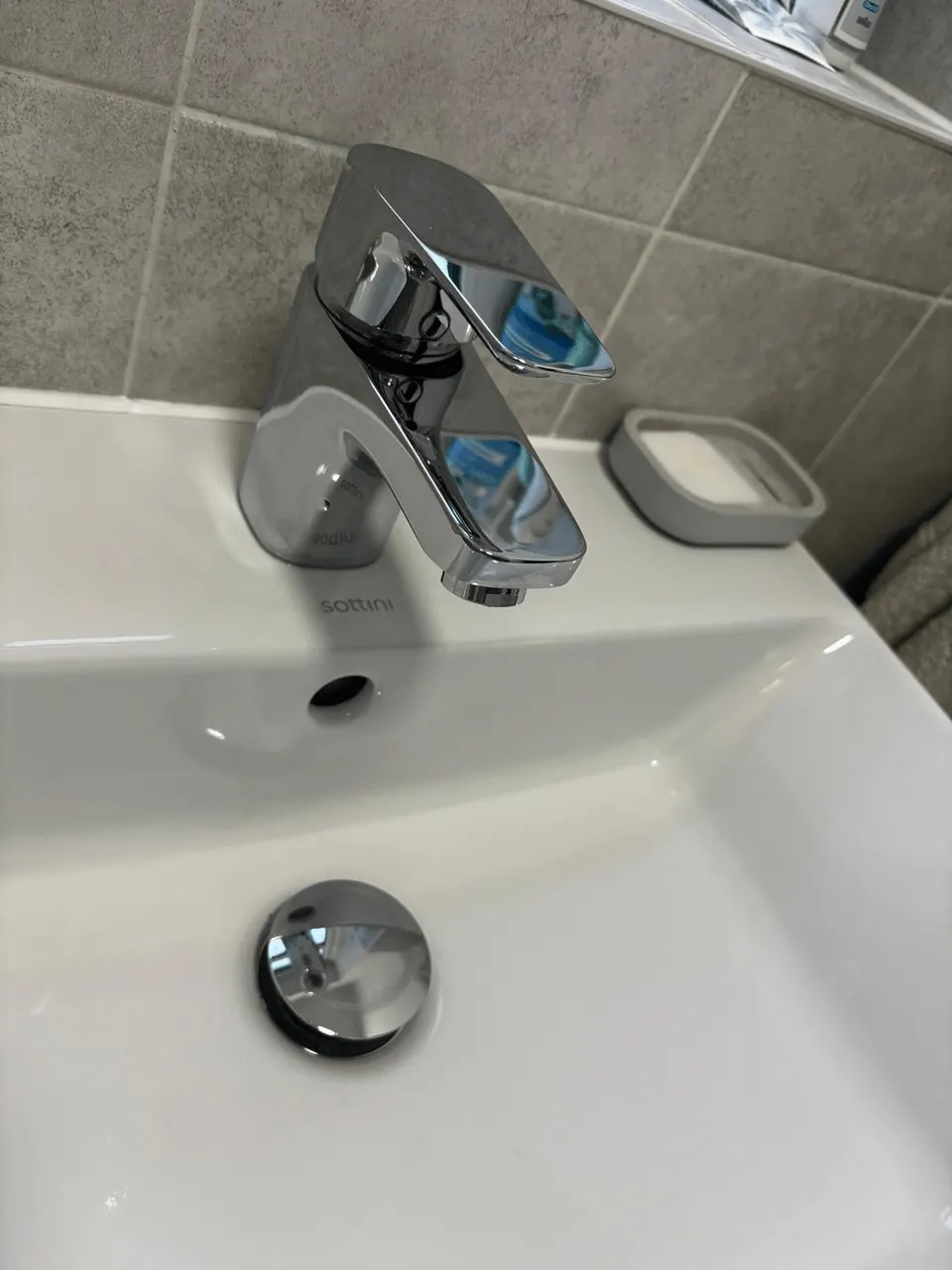
Before and after: a limescaled basin tap
After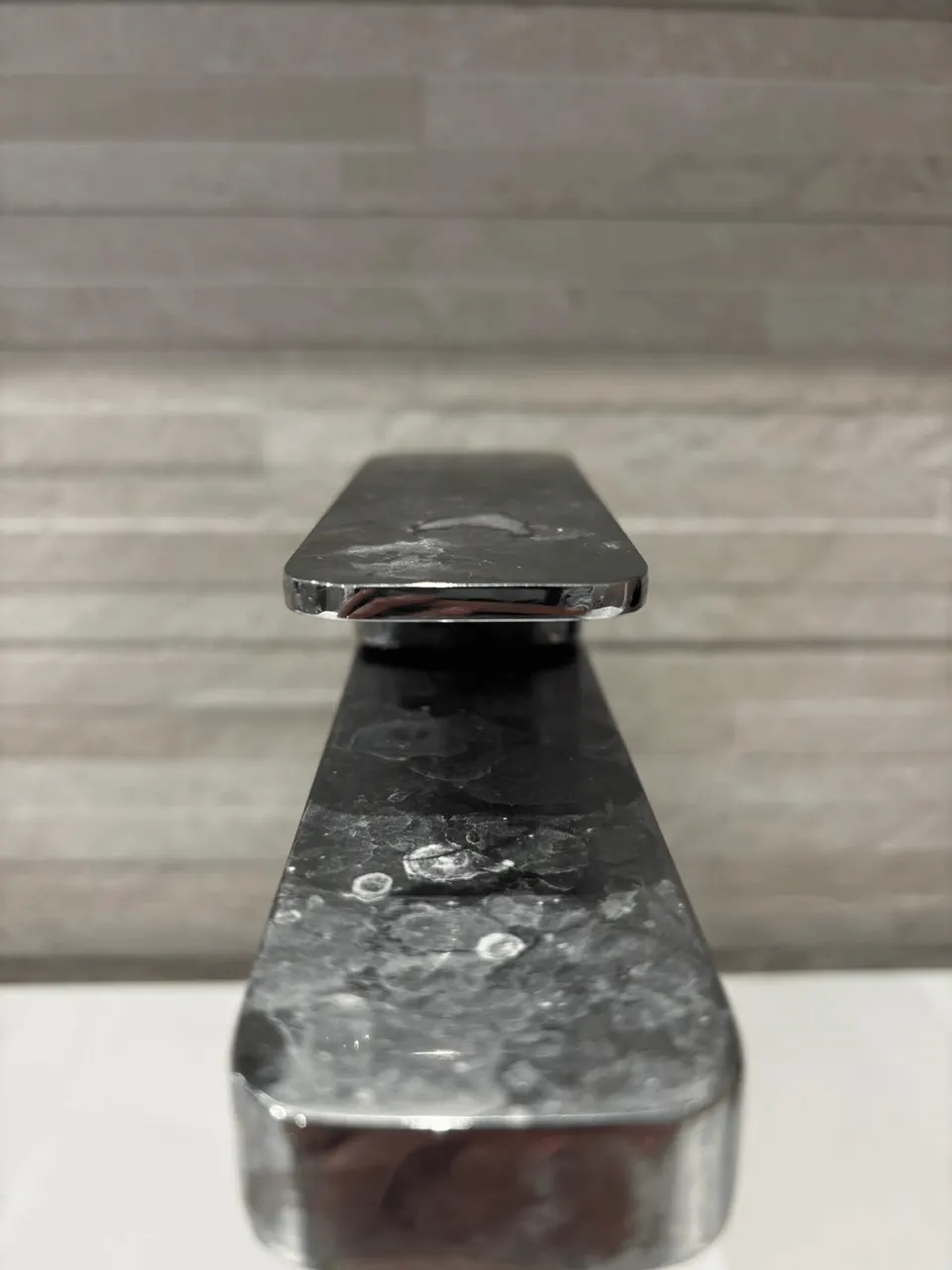 Before
How to remove limescale safely
The key is to dissolve the limescale, not scrape it. Scraping scratches chrome and glass, and the scratches then collect limescale faster.
Taps and chrome
- Check what your taps are made of. Chrome is fine with most descalers, but brushed, coloured and black finishes can mark, so check the manufacturer's advice.
- Soak a cloth in a descaler or diluted white vinegar and wrap it round the tap, especially the base and spout, where scale is thickest.
- Leave it for 20 to 30 minutes so the scale softens.
- Wipe it away with a soft cloth, using an old toothbrush around the base.
- Rinse with clean water and buff dry with a microfibre cloth.
Shower heads
Fill a sandwich bag with descaler or diluted vinegar, tie it round the shower head so the nozzles are submerged, and leave it for an hour. Rub the rubber nozzles with your thumb to push out loosened scale, then run the shower to rinse.
Shower screens and glass
Spray with a limescale remover, leave for a few minutes, then wipe with a non-scratch sponge. Squeegee and buff dry to finish.
Plugholes, drains and tap aerators
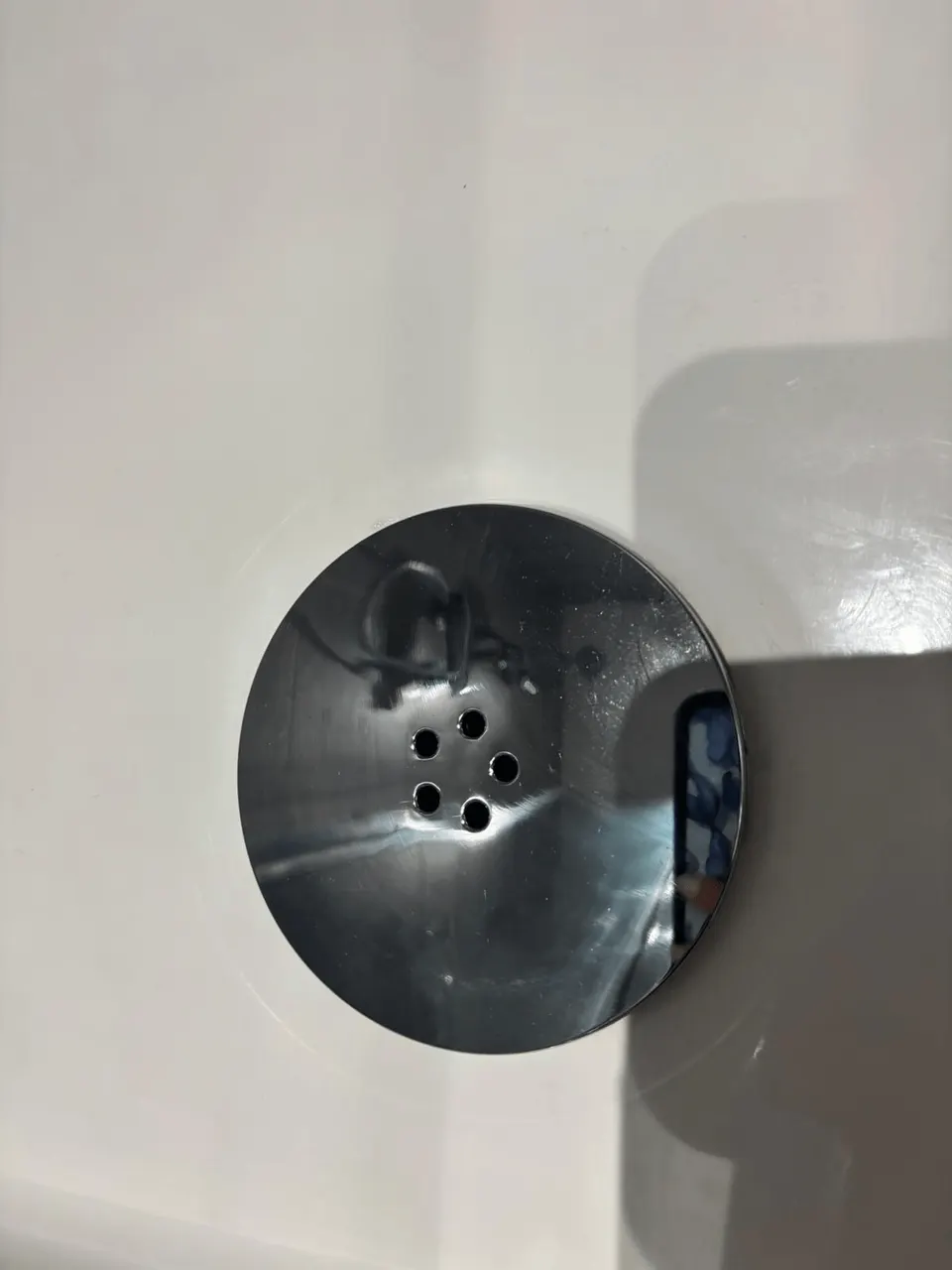
Unscrew aerators if you can and soak them. Drain covers and plugholes collect scale and soap scum together, so they need a soak and a brush. Our drain cover before and after shows what a difference it makes:
Before and after: a shower drain cover
 After
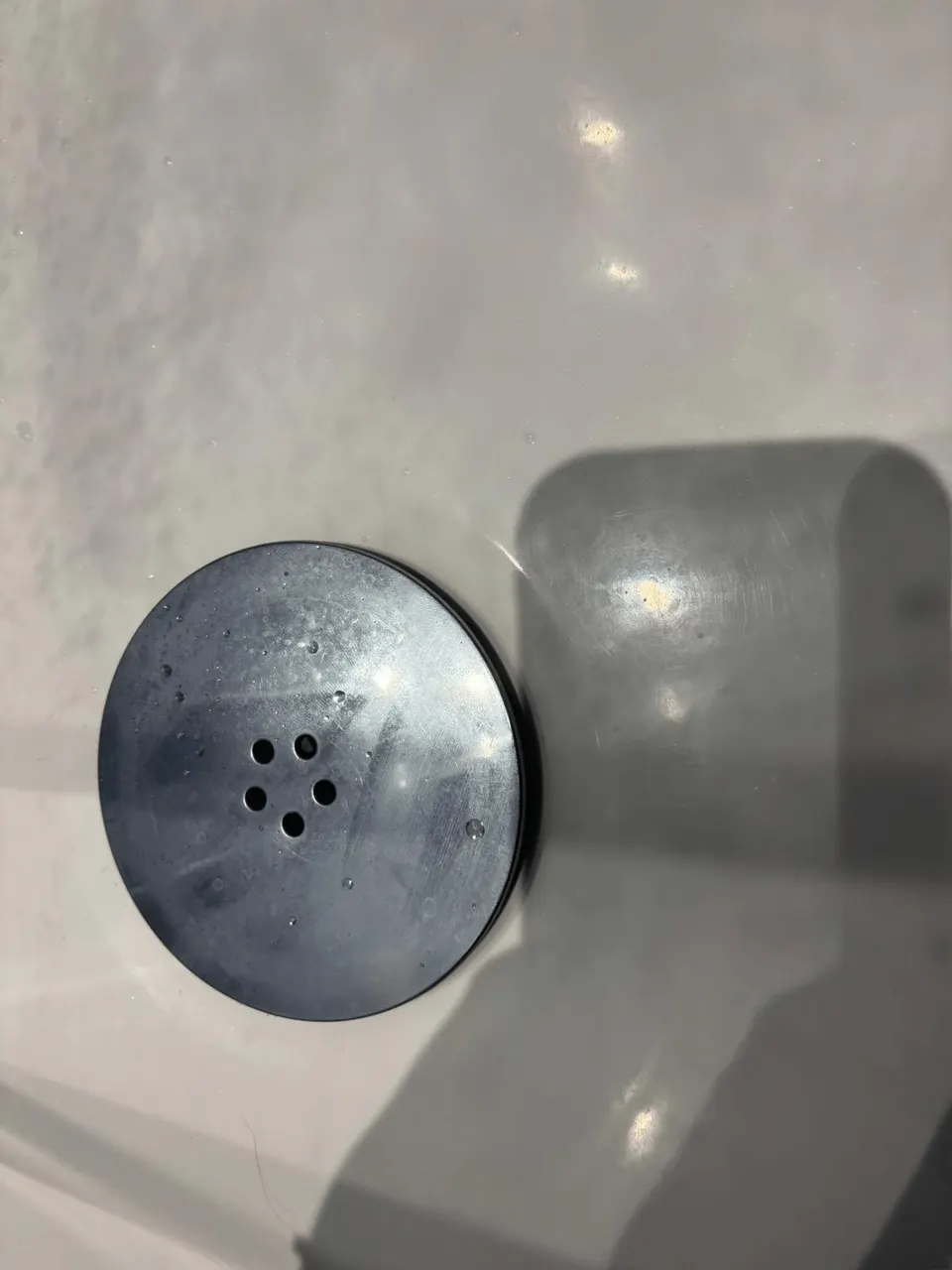 Before
Habits that stop it coming back
- Dry as you go. Limescale forms when water dries on a surface. A squeegee on the shower screen and a quick wipe of the taps after use stops most of it.
- Keep a microfibre cloth in the bathroom. It takes seconds and it's the single biggest difference you can make.
- Little and often. A light weekly clean with a mild descaler is far easier than a monthly battle.
- Look after appliances. Keep dishwasher salt topped up, and descale the kettle and coffee machine regularly.
- Think about a water softener if limescale is a constant problem. It's an investment, so get advice from a qualified plumber.
When to call in help
If limescale has built up over months or years, it can take several careful treatments to remove without damaging the finish. That's exactly what our bathroom deep clean is for, and the before and after photos on this page are from our own jobs. Once it's clear, a regular clean keeps it that way.